
TL;DR: Automated Trading Strategies (November 2024) is a collection of material for traders who want to move from clicking buttons to running systematic, rules-based strategies. It centers on the automation workflow that matters: define a strategy, backtest it, manage orders and risk, and connect it to a platform. We could not verify a fixed module list for this specific compilation, so the summary below describes the domain honestly rather than inventing a syllabus. If you want a systematic foundation, this is a useful starting point.
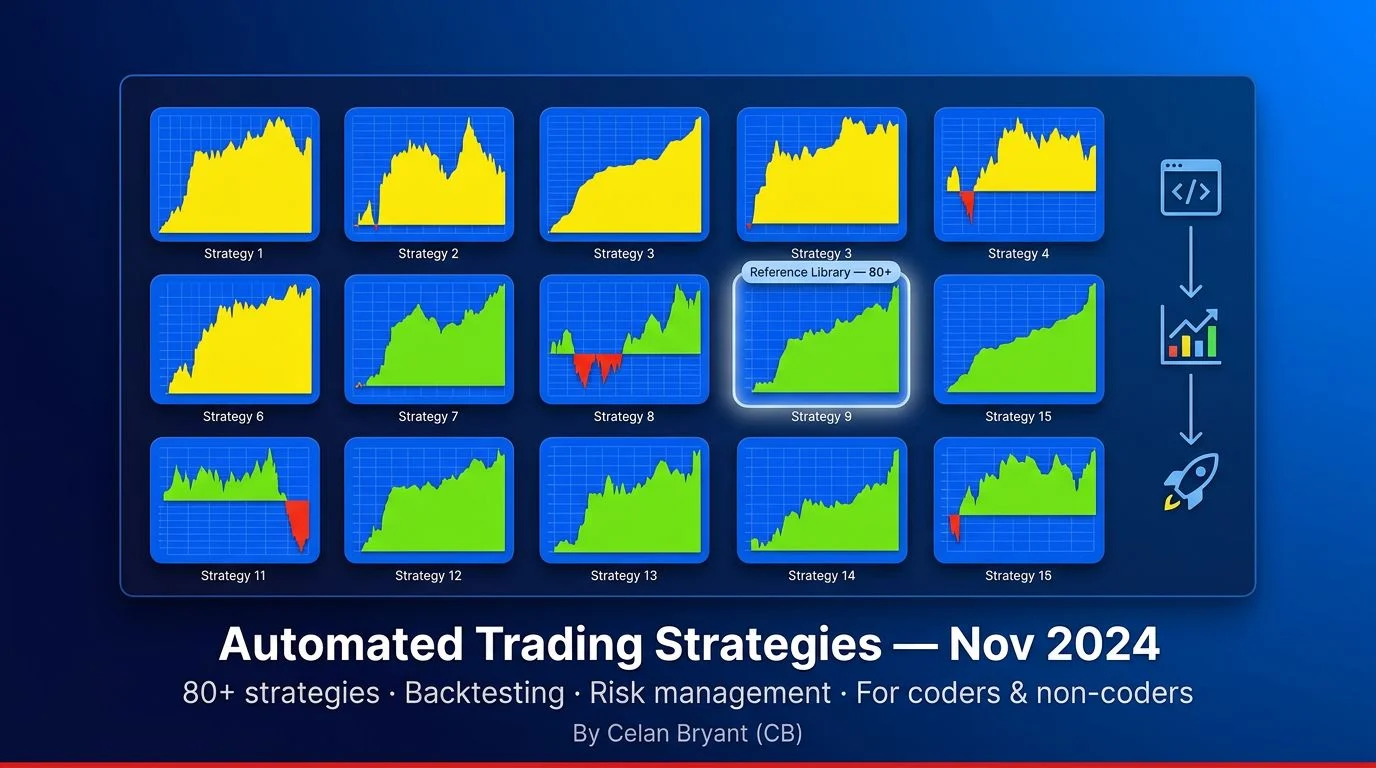
What Automated Trading Strategies Covers
At its core, automated trading replaces gut decisions with a defined set of rules a machine can follow. Material in this space typically walks through the main strategy paradigms, trend-following, momentum, mean-reversion, and statistical arbitrage, and how each behaves in different market conditions. Understanding which paradigm fits your goals is the first real step, and it connects naturally to broader day trading strategies you may already use discretionarily.
The Build and Backtest Loop
The heart of any automated approach is the loop of strategy development, backtesting, and optimization. You define entry and exit rules, test them against historical data to see whether the edge is real, then refine without overfitting to the past. This is where systematic trading earns its keep, because it forces you to measure an idea before risking money on it, and it pairs well with disciplined risk management at the portfolio level.
Orders, Risk, and Execution
A working system is more than a signal. It needs order management, position sizing, error handling, and a clean connection to a broker or trading platform so the strategy runs as intended. These execution details separate a backtest that looks good from a system that survives live markets, and they reward the same technical analysis discipline you would apply by hand.
Who It Fits Best
This collection suits a particular trader:
- Discretionary traders curious about systematic, rules-based methods
- Traders who want to backtest ideas before trading them live
- People comfortable with a more technical, process-driven approach
- Developing traders pairing automation with trading psychology work
If you expect a plug-in money machine, this is not it. Automation rewards testing, iteration, and honest measurement.
An Honest Note on This Compilation
Because this is a dated compilation rather than a single branded course, its exact contents are not publicly documented, so we have described the field instead of fabricating a module list. Treat it as a systematic-trading starting library and judge each included piece on its own merits. It pairs with any price action or quantitative study you already trust. For neutral background, Investopedia’s overview of algorithmic trading is a useful start.
Automated Trading Strategies: Common Questions Answered
What is Automated Trading Strategies? It is a November 2024 collection of automated and algorithmic trading material covering strategy paradigms, backtesting, optimization, and execution rather than a single fixed syllabus.
Who is it for? Traders moving from discretionary clicking toward systematic, rules-based methods.
Is it worth it? For traders who want a systematic foundation, yes, provided you treat it as a starting library and test everything yourself.
Is it legit? It is a real compilation of automated-trading material; because the exact contents are not publicly documented, we have framed it honestly.
Do I need coding skills? Some comfort with a technical, process-driven workflow helps, since automation involves rules, testing, and platform setup.
What makes systematic trading different? It measures an edge through backtesting before risking capital, instead of relying on gut feel.
Final Take for Systematic Traders
If you want to trade rules instead of impulses, Automated Trading Strategies is a reasonable on-ramp to the systematic workflow. Download it, backtest honestly, and build from there.


