
TL;DR: Blueprint to Extreme Reversals is a reversal trading course from Dr. Aiman Al-mansoori of Trading Terminal, a senior trader at Peak Capital Trading who has mentored 100+ traders. It covers top and bottom reversals at overbought and oversold extremes, a tight-stop sizing technique, and case studies of called reversals.
What the Course Actually Teaches
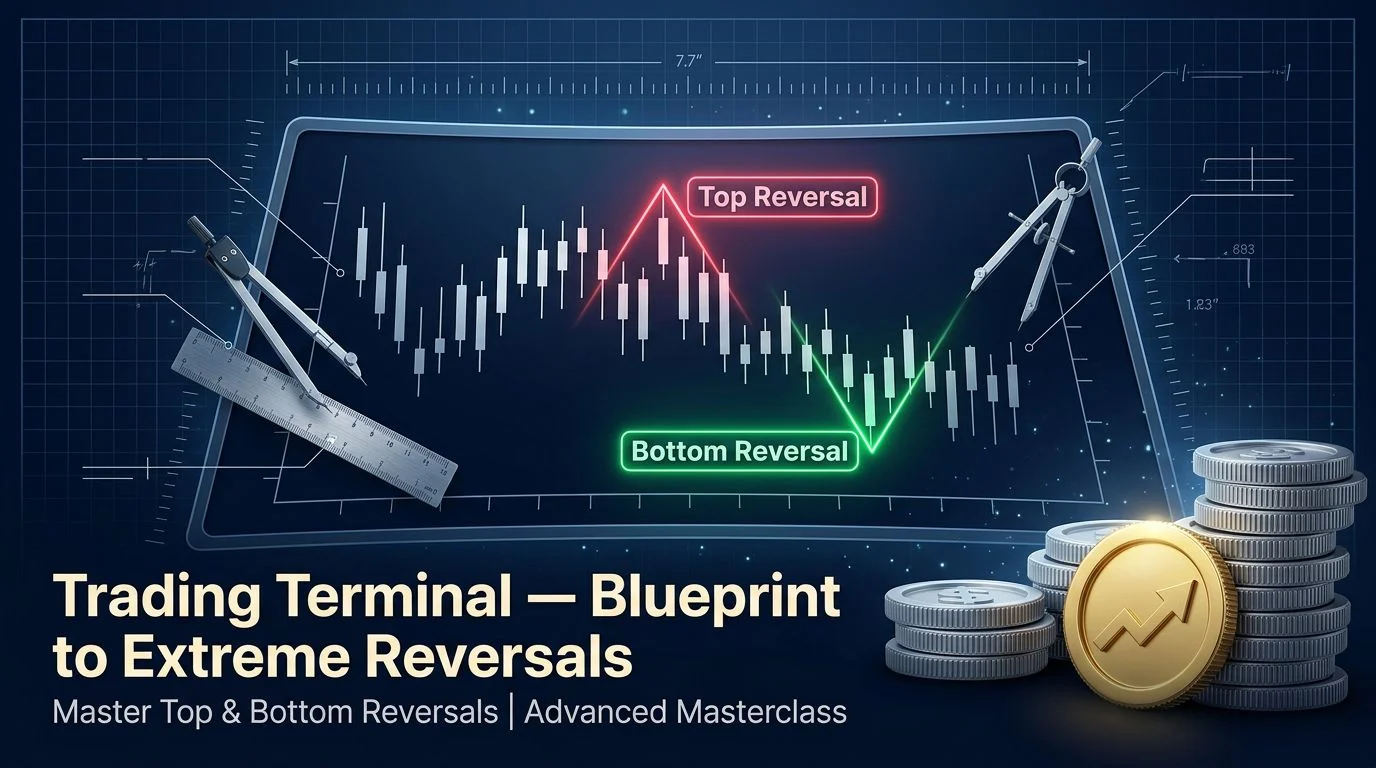
Blueprint to Extreme Reversals is a course by Dr. Aiman Al-mansoori that teaches a counter-trend method for catching peaks and troughs in price. The core is what he calls Top and Bottom Reversals: reading overbought and oversold reversals where momentum has stretched too far and a snap-back becomes likely. He walks through how to spot those extremes, how to time an entry near the turn, and how to read the behavior that usually precedes one.
Three pieces hold the material together. First, the reversal read itself. Second, a position-sizing technique built on very tight stops. Third, the psychology of standing against a crowd that is still pushing the trend. The case studies are where it earns attention. Dr. Al-mansoori reports calling several Extreme Reversals in advance, and he breaks down each setup so you can see the logic he used, not just the result.
The Tight-Stop Sizing Idea, and Why It Cuts Both Ways
The most talked-about part of this reversal trading course is the stop-loss technique. The idea: place a tight stop right beyond the reversal level so you can take a heavier position while keeping the dollar risk small. When a turn fires, the reward against that small risk can be large. When it does not, you are out fast.
Be honest with yourself about what that means. Heavier size on a tight stop raises your risk per attempt, and it punishes a wide or badly placed stop hard. Tight stops also get clipped more often by noise. This approach rewards discipline and clean entries, and it can drain an account quickly if you size up before you can read the setups cleanly. There is no promised outcome here, only a method with a sharp edge on both sides. Backtest it on the top and bottom reversal trading examples from the case studies before you ever increase size.
Psychology and Reading the Crowd
Reversal trading is mostly a head game, and the course treats it that way. Buying into a falling market or selling into a ripping one fights every instinct. Dr. Al-mansoori spends real time on market sentiment reading: how fear and greed cluster at extremes, why most traders pile in exactly when a move is exhausted, and how to keep your hands steady when the tape looks ugly. If you want the academic frame for these conditions, Investopedia’s primer on overbought and oversold markets pairs well with the lessons here.
About Dr. Aiman Al-mansoori
Dr. Aiman Al-mansoori trades as a senior member of Peak Capital Trading and runs the Trading Terminal channel. He credits his approach to years of reading extremes rather than chasing trends, and he reports mentoring more than 100 traders to date. The teaching style is direct: he shows the setup, names the level, and explains the entry. He does not dress reversal trading up as easy, which is part of why the material lands as instruction rather than a pitch.
How It Stacks Up Against Trend Methods
Most courses you will find teach trend-following or breakout entries. They wait for confirmation and ride momentum. This one does the opposite. It hunts the turn, which is harder and less forgiving, but the payoff per correct call is bigger because you enter near the extreme instead of mid-move. If your shelf is already full of breakout playbooks, this fills the gap they leave: what to do when price has run out of road. Pair it with solid tight stop-loss risk technique habits and a basic grasp of price action structure and it slots in cleanly.
Who Gains From It, and Who Will Struggle
This fits traders who like patient, selective entries and can sit on their hands until an extreme actually forms. Newcomers get a clear, single-method framework instead of a scattered survey. Seasoned traders get a counter-trend tool that complements trend systems they already run. The case-study format makes it easy to study one called reversal at a time.
It will frustrate anyone who wants a high-frequency, fire-and-forget system. Catching turns means missing many of them, taking small losses on early entries, and waiting through quiet stretches. If you cannot stomach buying weakness or selling strength, or if you plan to size up before you have proven the read, you will fight this method more than it helps you. Treat the whole course as study material, not a signal to copy trades blind.
Reversal Trading FAQ for 2026 Buyers
How hard is the Blueprint to Extreme Reversals to apply as a beginner?
Reversal trading is one of the harder styles because you trade against the prevailing trend. The course gives a beginner a single clear framework and worked case studies, which shortens the learning curve, but expect to paper-trade the setups for a while before you risk real size.
Is the Blueprint to Extreme Reversals worth it?
Counter-trend traders get real value from the called case studies and the tight-stop sizing logic, which you rarely see taught in this detail. If you only trade trends and never plan to fade extremes, the fit is weaker. Judge it by whether catching tops and bottoms suits your temperament.
Is the Blueprint to Extreme Reversals legit?
The course is a genuine training program from Dr. Aiman Al-mansoori of Trading Terminal, a senior trader at Peak Capital Trading. The Extreme Reversals method, the case studies, and the psychology lessons are real instructional content. It teaches a skill rather than promising returns.
Does the Extreme Reversals method work in all markets?
The overbought and oversold logic behind Extreme Reversals applies wherever momentum stretches and snaps back, so the principles travel across stocks, futures, and forex. That said, you should test the setups on your own instrument and timeframe before sizing up, since liquidity and noise change how cleanly turns print.
Treat everything on this page as education about a trading method. Nothing here tells you which trades to take, and trading decisions stay entirely yours.


